Chinese name
嘉峪关关城 (Jiayuguan Guancheng)
The westernmost end of the Great Wall, known as the Greatest Pass Under Heaven.
Best time
May to October
Duration
Half day to full day
Location
Jiayuguan, Gansu Province, China
Why this stop matters
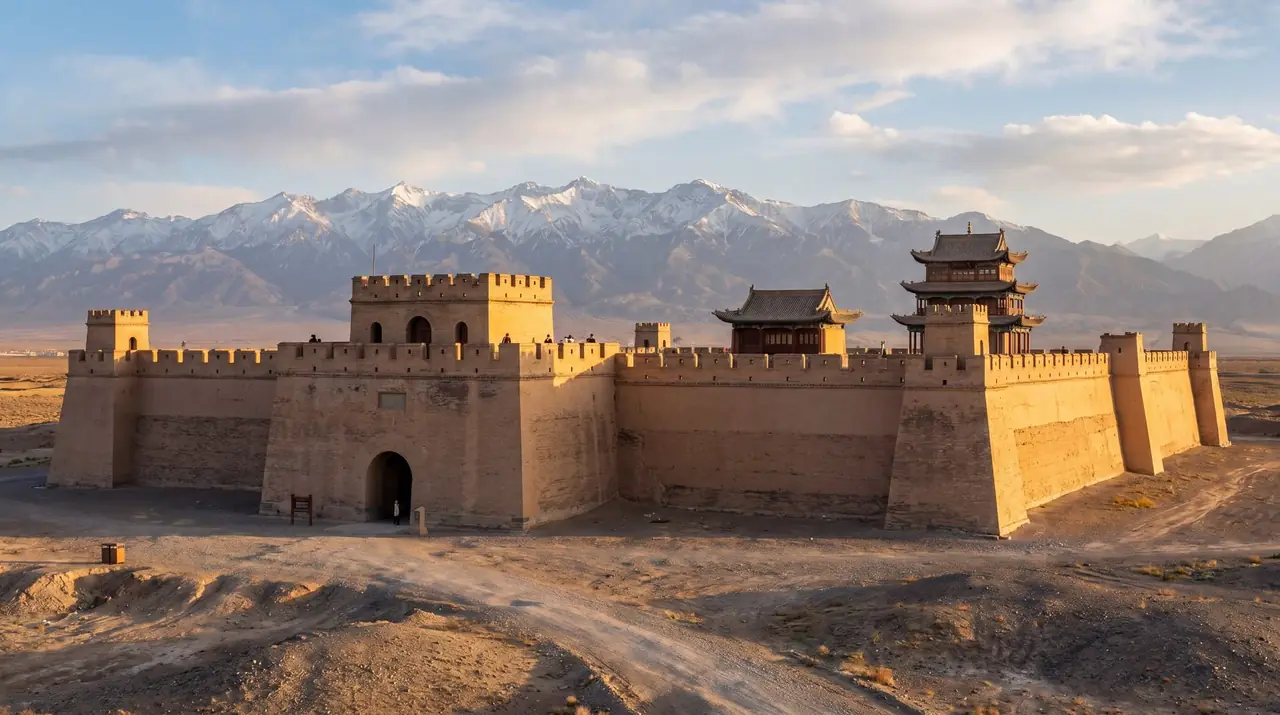
Jiayuguan is where the Great Wall effectively ends — a massive fortress standing alone in the desert, guarding what was once the edge of the known world. The reconstructed sections are impressive in scale, though history buffs should know much of what you see has been rebuilt. The real highlight is the atmosphere: standing on the ramparts with nothing but desert stretching westward, you understand why this place haunted the imagination of ancient travelers. The Overhanging Great Wall nearby is a steep climb but offers the best views. Do not skip the Wei-Jin Tombs — they are rarely visited and genuinely fascinating.
The short answer most travelers want: the Ming Great Wall runs from Shanhaiguan Pass in Hebei in the east to Jiayuguan Pass in Gansu in the west. Jiayuguan is the western terminus of the main Ming-era defensive line.
The fuller answer: the Great Wall is not one continuous wall. Different dynasties built different lines, and earlier Han-era walls pushed farther west toward Yumen Pass and Yang Pass. So "start and end" depends on which wall you mean.
For a Gansu trip, what matters is practical: Jiayuguan is the western end you can actually visit as a coherent fortress complex, with the main pass, the Overhanging Great Wall, and the Wei-Jin Tombs within a short taxi network.
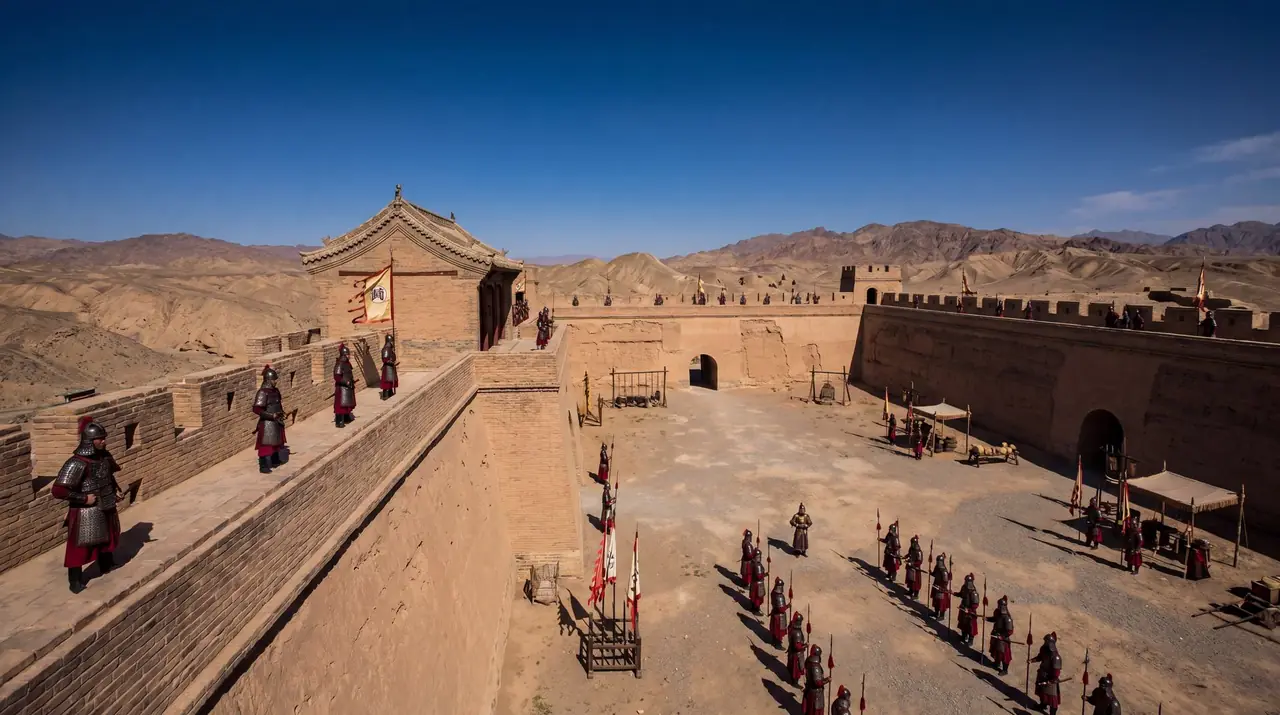
Start with the museum inside the complex. It explains the fortress system, the garrison life, and why this location mattered before you walk the ramparts. Without that context, the reconstructed buildings feel flatter than they should.
Then move through the main pass and onto the walls. The scale is the point here: desert in one direction, the corridor behind you, and a very clear sense of why this was the edge of the defended world.
Leave time for the Overhanging Great Wall and the Wei-Jin Tombs. The Overhanging section is a steep climb with the best landscape views; the tombs are small, underground, and easy to combine by taxi. A half day is the minimum, but a full day makes the stop feel less like a checkbox.
Most travelers arrive at Jiayuguan South Railway Station on the high-speed line and take a taxi to the pass. Keep the Chinese name 嘉峪关关城 saved on your phone, and confirm whether your driver means the main pass or the wider scenic area.
Carry your passport for ticket checks, and do not assume English support will solve the last-mile transport questions. The site itself is manageable, but the city is not a place to wing it without Chinese place names saved.
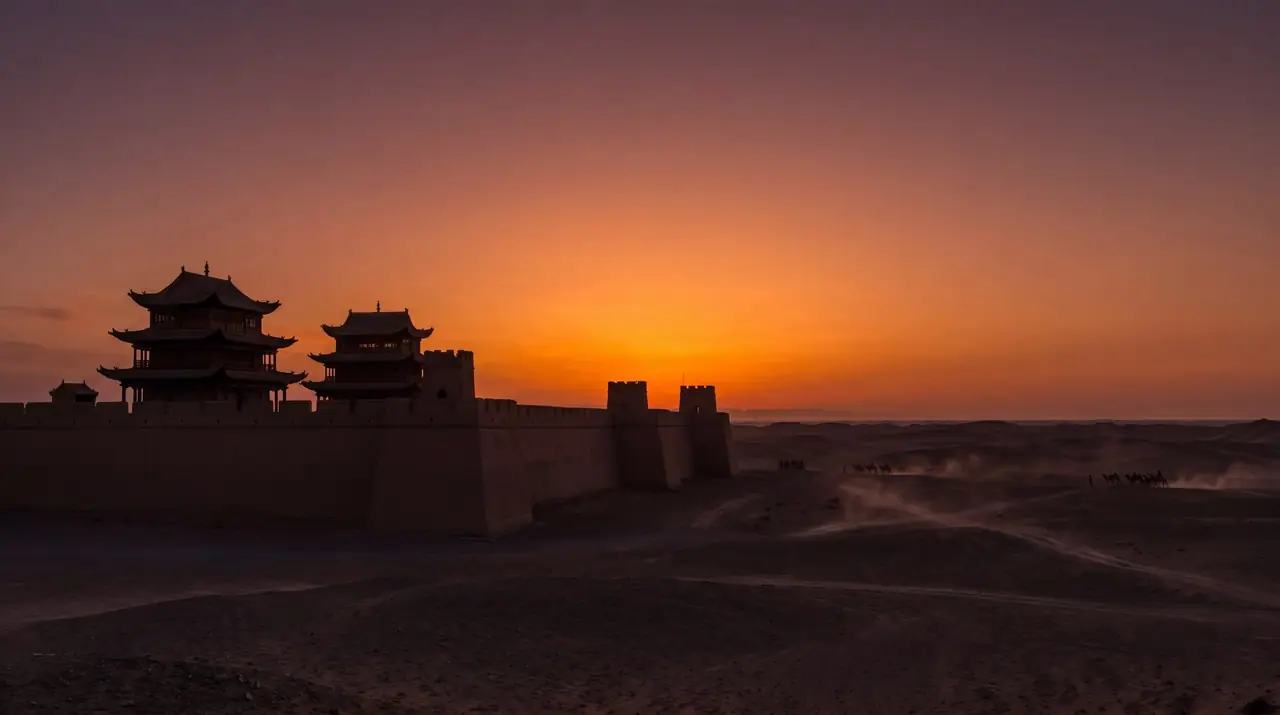
Late afternoon light is dramatic, especially on the desert-facing walls, but the wind can pick up quickly. A light windproof layer is worth carrying even on a warm day.
Yes, if the Great Wall or frontier history is part of why you came to Gansu. It pairs naturally with Zhangye before it and Dunhuang after it, and one night is enough to see the main sites without sprinting.
No, if you only want desert landscapes and cave art. In that case, a tight Zhangye-to-Dunhuang route can skip Jiayuguan, but you lose the strongest physical reminder of how the corridor was defended.
The mistake I see most often is treating Jiayuguan as a train-transfer city. The pass deserves at least a proper half day, and the Overhanging Wall is the part people remember most.
These are the on-the-ground details most likely to change how this stop feels.
This is the layer that helps the stop work in real life: Chinese naming, access, booking, passport checks, timing, and the actual level of on-site support.
Chinese name
嘉峪关关城 (Jiayuguan Guancheng)
Best base
Stay in Jiayuguan city. The main pass is an easy taxi ride, while the Overhanging Wall and Wei-Jin Tombs require extra transport planning.
Booking reality
The combined ticket is usually the smartest option if you plan to cover the wider fortress cluster instead of the main gate only.
Passport note
Carry your passport because the ticketing setup can still ask for ID, especially in busier periods.
Timing strategy
Do the museum and main pass first, then leave room for late-afternoon light if you want the desert-facing rampart views.
English support
Some signage and audio support exist, but getting between sites is still easier if you already have the Chinese names saved on your phone.
Useful companions if you are shaping a fuller day or deciding whether to stay overnight.
Short answers to the decisions that come up most often before and during a visit.
For the Ming Great Wall, Jiayuguan is the western end. Shanhaiguan, near the coast in Hebei, is usually cited as the eastern end. Earlier dynasties built walls farther west, so the answer depends on which period you mean.
Take a taxi from Jiayuguan South Railway Station to the main pass, which usually takes around 15–20 minutes. Save the Chinese name 嘉峪关关城 and confirm the destination with the driver before leaving.
Allow at least half a day for the main pass and museum. A full day is better if you also want the Overhanging Great Wall and the Wei-Jin Tombs, which require extra taxi time.
The combined ticket is usually the better value if you plan to visit more than the main gate. Check the current ticket rules on arrival and keep your passport with you for checks.
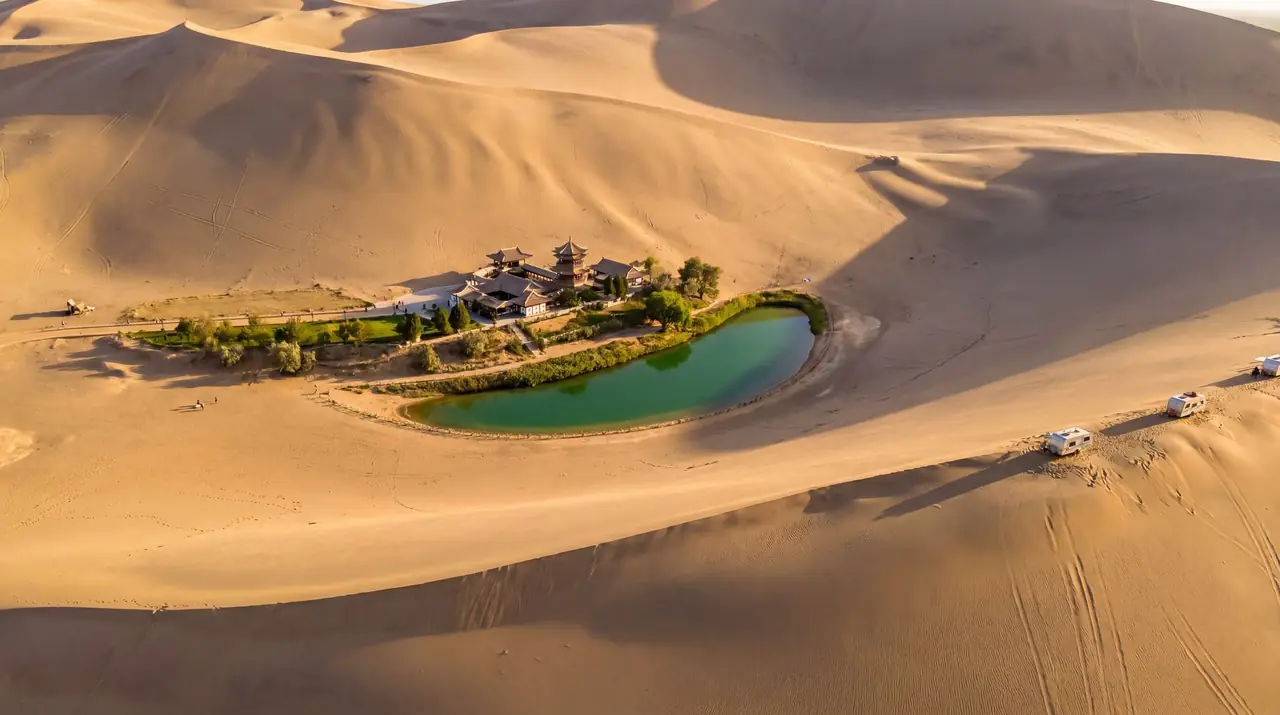
This 5-day itinerary covers the essential highlights of Gansu's Hexi Corridor, from Lanzhou's noodles to Dunhuang's ancient caves.
Gansu's transportation network has improved dramatically with high-speed rail connecting major destinations. Here's how to navigate the province.
If this stop is a must but the rest of the province still feels too wide, send us the draft plan and we can help tighten the sequence.
Best fit if you already know your dates, route draft, or must-keep stops.
Prefer to write directly? WhatsApp +8618611344921 or muxiaoxin@gmail.com.