Chinese name
麦积山石窟 (Maijishan Shiku)
Dramatic cliff-carved Buddhist grottoes with thousands of ancient sculptures.
Best time
April to October
Duration
Half day
Location
Maijishan, Tianshui, Gansu Province, China
Why this stop matters
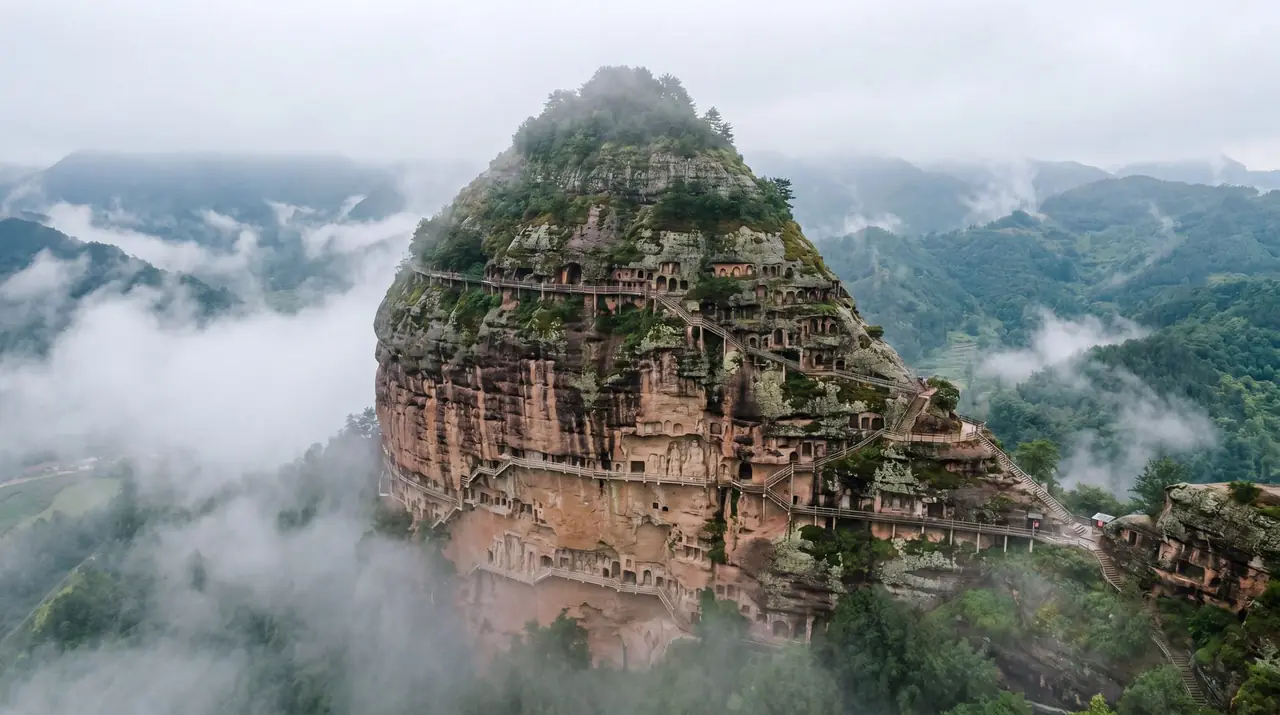
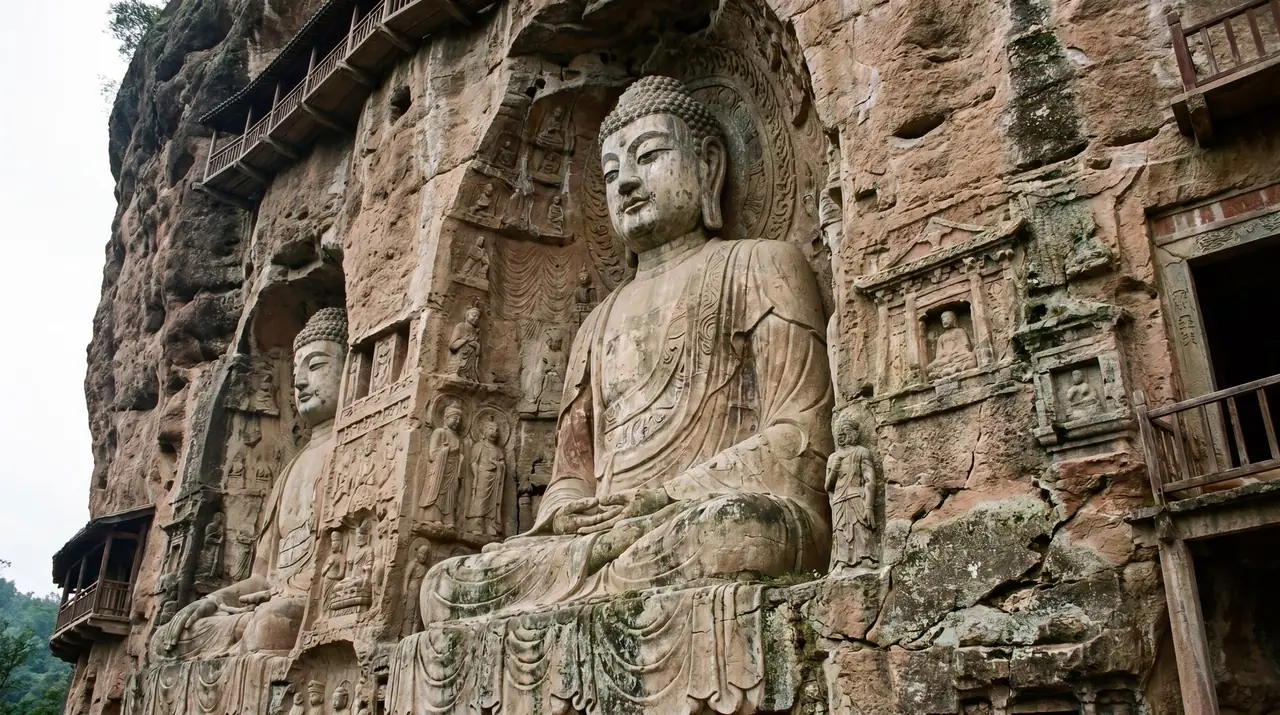
Maijishan is the most underrated site on this list. While everyone flocks to Dunhuang, these cliff-carved grottoes see a fraction of the visitors — which means you can actually stand in front of a 1,500-year-old sculpture without being jostled. The climb up the wooden walkways bolted to the cliff face is thrilling (and not for vertigo sufferers), but the Wei-dynasty statues at the top are extraordinary. The surrounding landscape of misty green mountains is a welcome relief after days of desert. Tianshui itself is an unremarkable city, but the grottoes alone justify the detour.
Maijishan is the counterweight to Dunhuang. Where Mogao is a desert pilgrimage of dark caves and painted interiors, Maijishan is a cliff face in green mountains, with wooden walkways pinned to the rock and clay sculptures looking out over the valley. The two sites do not repeat each other, which is why serious cave-art travelers often rank this detour higher than they expected to.
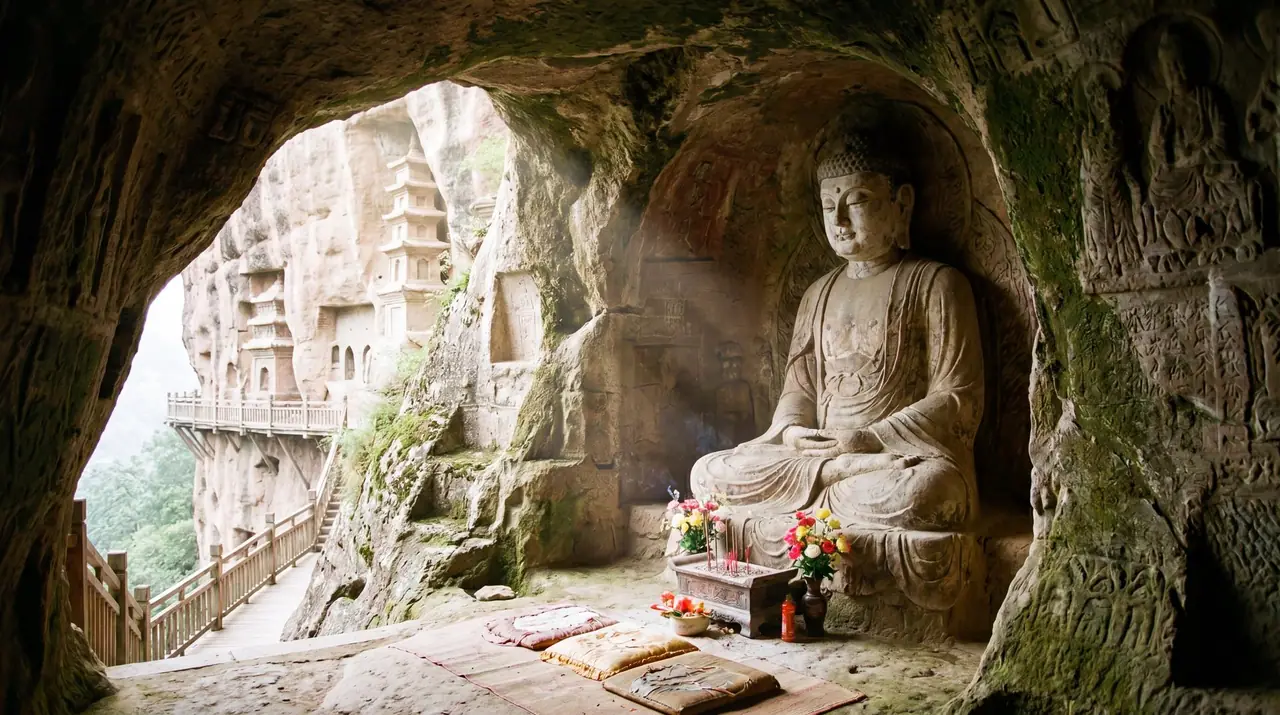
The sculpture is the point. Maijishan holds thousands of clay figures and a long run of murals, much of it from the Wei and later periods. You do not need to be a Buddhist art specialist to feel the difference between a museum display and figures that have been part of this cliff for more than a thousand years.
It is also part of the UNESCO Silk Roads listing, which surprises people who assume Dunhuang is the only Gansu site on that list. Being less famous than Mogao means fewer crowds and more room to actually look.
The regular ticket covers the main walkway and the core caves, which is already substantial. The special caves are a separate decision, and for travelers who care about the best sculpture, they are usually worth the extra cost and the extra time.
Do not assume you can simply walk into every special cave on the day. Access can depend on timing, staffing, and how busy the site is. If this is a priority, say so when you arrive rather than after you have already walked the main route.
If you are traveling with someone who is indifferent to cave art, the regular ticket is enough. If you came to Gansu specifically for Buddhist art, budget for the special caves and give the site a proper half day rather than treating it as a photo stop.
Most travelers base themselves in Tianshui and reach Maijishan by taxi, hired car, or local bus. The site is outside the city, so do not assume you can step off a city bus at the entrance without planning the last leg.
From Xi'an, the high-speed train to Tianshui takes roughly 1.5–2 hours, which makes this one of the easiest Gansu detours to bolt onto a Shaanxi itinerary. The practical version is to arrive in Tianshui one afternoon, sleep there, and visit Maijishan the next morning.
Keep the Chinese name 麦积山石窟 saved, and confirm your return transport before you leave the city. This is not a place where you want to improvise the ride back at closing time.
Half a day at the site is realistic. That includes the walkways, the main caves, and a little time at the viewpoints without rushing. Add the special caves and you should plan closer to a full morning or afternoon.
Weekday mornings are the best combination of light, air, and low crowd pressure. The mountain weather changes quickly, and the walkways are exposed, so a light rain shell and shoes with grip matter more than they would at a museum.
If heights genuinely bother you, be honest about it. The upper walkways are narrow and the drop is real. The lower sections still give you excellent sculpture, so you can enjoy the site without forcing the full climb.
Yes, and for the opposite reasons. Dunhuang is about painted interiors and scale; Maijishan is about sculpture, vertical architecture, and landscape. Seeing both gives you a much more complete picture of Gansu's Buddhist heritage than seeing Dunhuang alone.
If your trip is short and already packed with desert stops, Maijishan is the detour I would cut first. If you have four or more days and care about art, it is the detour I would protect.
The common mistake is treating Tianshui as a boring transit city and skipping the site entirely. Tianshui itself is not the attraction; the cliff is.
These are the on-the-ground details most likely to change how this stop feels.
This is the layer that helps the stop work in real life: Chinese naming, access, booking, passport checks, timing, and the actual level of on-site support.
Chinese name
麦积山石窟 (Maijishan Shiku)
Best base
Use Tianshui as the overnight base. Reaching the grottoes usually means a taxi, hired driver, or pre-arranged transfer rather than spontaneous public transport.
Booking reality
Regular admission is easy, but the special caves are a separate decision and often the part serious visitors care about most.
Passport note
Bring your passport for ticketing and hotel checks, and do not assume smaller local services will accept foreign cards.
Timing strategy
Weekday mornings are best. Avoid wet or foggy conditions if exposed cliff walkways and visibility matter to you.
English support
English support is minimal. Save the Chinese name, your hotel name, and return transport details before leaving Tianshui.
Useful companions if you are shaping a fuller day or deciding whether to stay overnight.
Short answers to the decisions that come up most often before and during a visit.
Reach Maijishan by taxi, hired car, or local bus from Tianshui. The site is outside the city, so confirm your transport and return ride before leaving. Save the Chinese name 麦积山石窟 for drivers.
Yes, if cave art and Buddhist sculpture interest you. The high-speed train to Tianshui takes roughly 1.5–2 hours, and an overnight there makes the Maijishan visit relaxed rather than rushed.
Allow half a day for the main walkway and core caves. Add more time if you plan to visit the special caves, which cost extra and are the highlight for travelers who care about sculpture.
The upper walkways are exposed and can be difficult for anyone with a serious fear of heights. The lower sections still offer strong sculpture and views, so you can skip the highest climbs without missing the site entirely.
This comprehensive 7-day itinerary adds Tibetan culture at Labrang Monastery and the Maijishan Grottoes to the classic Hexi Corridor route.
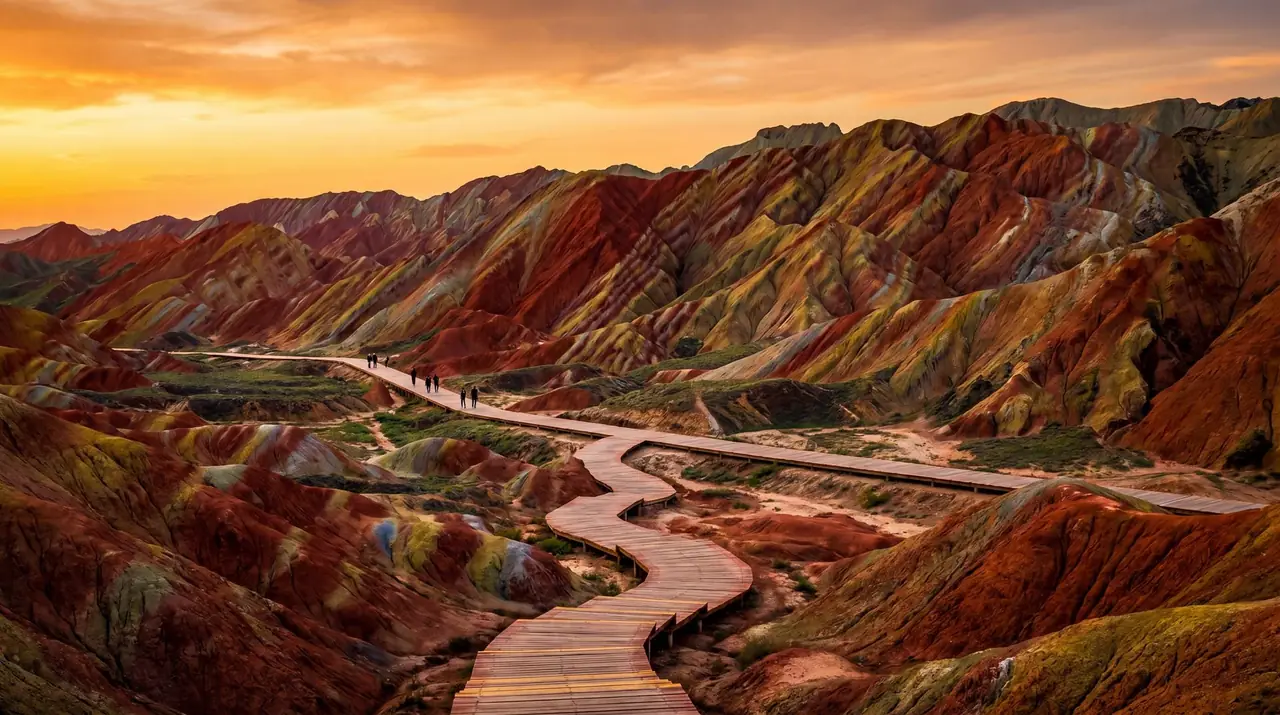
Packing for Gansu requires preparation for varying altitudes, temperatures, and outdoor activities. Here's your complete packing guide.
If this stop is a must but the rest of the province still feels too wide, send us the draft plan and we can help tighten the sequence.
Best fit if you already know your dates, route draft, or must-keep stops.
Prefer to write directly? WhatsApp +8618611344921 or muxiaoxin@gmail.com.